

































Barcelona once again became the centre of the global mobile and technology ecosystem as the Mobile World Congress (MWC) returned with its 2026 edition, bringing together more than 2.900 exhibitors and over 1.200 speakers. This year’s official theme, “The IQ Era”, focused on intelligent infrastructure, AI-driven connectivity, enterprise AI integration, and inclusive innovation, signaling a major shift in how telecommunications networks are evolving into the backbone of the global AI ecosystem.
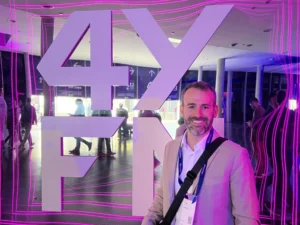
Representing Mosaic Factor at the event was Head of Sales Joan Sampablo, who attended on behalf of Mosaic Factor to explore the latest developments shaping the future of connectivity, artificial intelligence, and digital infrastructure.
Telecom as the backbone of AI
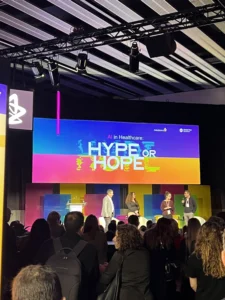
MWC 2026 highlighted how the telecom industry is moving beyond connectivity to become a core enabler of the next generation of AI-powered services. Leadership from the GSMA outlined three key pillars expected to drive the next phase of digital growth:
- The completion of 5G standalone network rollouts.
- Broader access to open and inclusive AI technologies.
- Stronger global digital safety and trust frameworks
These priorities reflect a broader shift toward networks that are not only faster but also capable of supporting distributed intelligence and AI-driven services.

The rise of on-device intelligence
A major theme throughout the event was the rise of AI everywhere, particularly the shift toward on-device and network-native intelligence. Chipmakers and device manufacturers showcased powerful new system-on-chip architectures designed for local AI inference, enabling capabilities such as:
- Real-time translation
- On-device summarization
- Advanced photo processing
- AI assistants capable of performing complex tasks without relying on the cloud.
For developers and enterprises, this shift signals a new design standard where applications are built with local AI processing and multimodal interaction in mind, combining camera, voice, and text interfaces to deliver richer experiences.
Future of autonomous systems
Another prominent topic was the emergence of agentic AI systems, where autonomous AI agents can coordinate tasks across networks, infrastructure, and physical environments. Telecom providers and startups demonstrated how such systems could be applied to network orchestration, automated operations, and enhanced cybersecurity.
Next generation of connected systems
One of the most talked-about concepts at this year’s congress was “kinetic compute” and “kinetic tokens.” These represent ultra-fast compute units designed to synchronise real-world actions across robotics, drones, autonomous vehicles, and other distributed systems. Telecom operators argue that their networks are uniquely positioned to deliver the millisecond-level coordination required to power these emerging technologies.
Security, digital trust, and global inclusion
Security and global digital inclusion also featured prominently across the conference agenda. With cybercrime costs continuing to rise worldwide, industry leaders emphasised the importance of:
- Privacy-preserving AI
- Stronger digital identity frameworks
- AI models capable of supporting more global languages
- Cross-border infrastructure standards
These priorities reflect the growing recognition that technological innovation must be accompanied by strong governance and inclusive digital access.
Mosaic Factor at MWC 2026
According to Joan, attending MWC provides valuable insights into how the telecom and technology landscape is evolving at a rapid pace. The event highlighted the growing importance of AI-enabled infrastructure and edge computing, as well as the increasing role telecom networks will play in enabling intelligent applications and connected systems.
For Mosaic Factor, attending the congress offers an opportunity to stay closely aligned with emerging industry trends and innovations that will shape the next generation of digital solutions.
As the industry moves deeper into the so-called IQ-Era, the convergence of AI, advanced connectivity, and distributed computing is expected to redefine how devices, networks, and businesses interact, creating new opportunities for innovation across sectors worldwide.